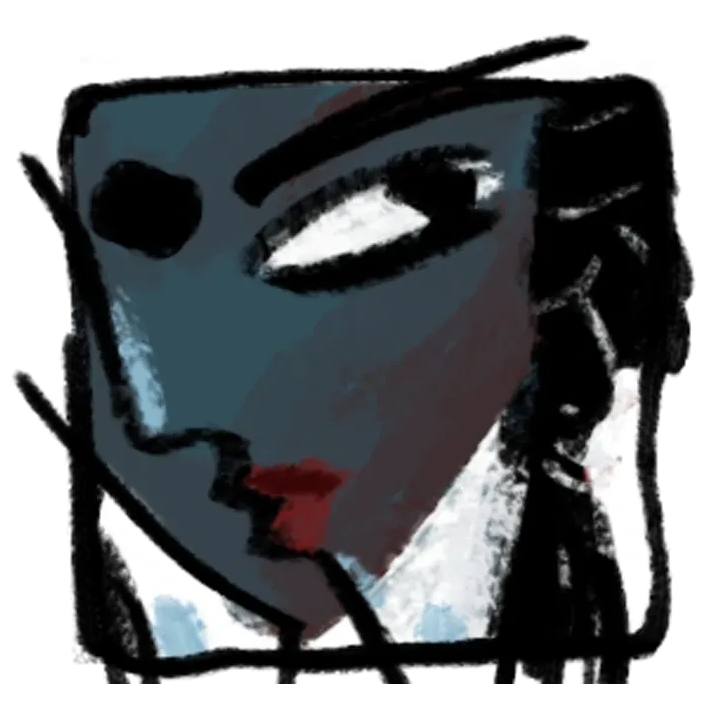
The claim that art can opt out of politics is itself a political position — and usually a comfortable one, available only to those the current arrangement of power doesn’t threaten.
Earlier this year, Wim Wenders — one of the most celebrated filmmakers alive, heading the jury at the Berlin Film Festival — said, in essence, that art should not be political. Arundhati Roy withdrew from the festival on the spot, calling the remark, in the context of a jury discussing the Gaza-Israel conflict, “jaw-dropping.” A few months later at Cannes, jury president Park Chan-wook took the opposite position, insisting that a film carrying a political statement is not an “enemy of art,” only that it must still be made artfully rather than as propaganda. Two of world cinema’s most respected figures, at two of its most prestigious festivals, in the same year, couldn’t agree on the most basic question a filmmaker ever answers: who is this for, and what is it for. That disagreement is not a footnote. It is the argument.
The oldest argument in the medium
The phrase “art for art’s sake” is old — coined in 19th-century France by Théophile Gautier, later carried by Oscar Wilde into the English-speaking world, built on the idea that art’s value is intrinsic, aesthetic, and answerable to nothing outside itself. Its counter-tradition is just as old: Tolstoy argued art’s purpose was to transmit moral feeling and bind people together; Brecht built an entire theatrical language around the belief that art should provoke its audience into changing the world, not merely admire it. India has lived this exact tension for decades through its Parallel Cinema movement — filmmakers who rejected commercial cinema’s escapism to make films about land reform, caste, and poverty, precisely because they believed cinema owed something to the society that funded and watched it. Wenders and Park were not having a new argument in 2026. They were having the oldest argument in the medium, live, in front of the world’s cameras.
Neutrality is a political position too
Here is why I don’t think this is a close call. The claim that art can simply opt out of politics is itself a political position — and usually a comfortable one, available only to those the current arrangement of power doesn’t threaten. Consider Dhurandhar, the Indian film that became 2025’s biggest hyper-nationalist box office success at roughly $160 million, drawing accusations of reducing Pakistan and Muslims to antagonists while its defenders insisted it was simply cinema, simply entertainment, simply art. Notice what “simply art” did there: it took a polarizing, profitable political argument and asked to be exempted from scrutiny by calling itself neutral. Meanwhile, IndieWire’s reporting on India’s film censorship system this year documented, through leaked data, just how deep and selective that scrutiny already runs — films get cut, delayed, or banned not evenly, but along lines that protect certain narratives and punish others. “Art for art’s sake” sounds like neutrality. In practice, in India in 2026, it has repeatedly functioned as cover for whichever politics is already winning.
What Karuvachy Films chose
This is exactly the terrain Karuvachy Films was built to work in, and I’ll say plainly why I don’t buy the neutral position. When we made Sengadal, about Sri Lankan Tamil refugee fishermen trapped between two nations’ violence, there was no version of that film that could be “just” a fishing story — the silence around those fishermen’s deaths was itself a political choice by everyone who preferred not to look. Maadathy, about a Dalit girl deified after death by the very community that erased her in life, could not be told as pure aesthetics without becoming complicit in the erasure it was documenting. White Van Stories, about enforced disappearances, exists because someone decided those disappearances shouldn’t be spoken about — and a film that simply admired its own cinematography while skirting that decision would have been a smaller kind of dishonesty. Our mission at Karuvachy has always been to amplify unheard voices and act as a positive catalyst for change; that mission is meaningless if the films pretend not to take a side about whose voice deserved to be unheard in the first place.
Craft still matters
None of this means political cinema gets a pass on craft — Park Chan-wook’s caveat matters. A film that is only its message, without rigor, restraint, or genuine artistry, is propaganda regardless of how righteous its politics feel, and propaganda insults its audience as much as false neutrality does. The standard isn’t “does it have a message,” it’s “does it earn that message through the discipline of the work.” So the “so what” here is this: the next time you hear a film, a festival, or a filmmaker claim to be above politics, ask what that claim is protecting, and who benefits from the audience not asking. Art doesn’t get to be neutral about a world that isn’t. The only real choice a filmmaker has is whether to be honest about which side the camera is already standing on.
— Elango Raghupathy
Producer · Co-Founder, Karuvachy Films · elangoraghupathy.com
Sources
- Indian cinema: propaganda at the pictures — Index on Censorship
- Myth of the Anti-Indian Film: The misplaced attack on Dhurandhar — Open The Magazine
- India’s Film Censorship Is Getting More Political — and a New Data Leak Reveals Just How Deep It Runs — IndieWire
- Cannes 2026: ‘Politics and Art Should Not Be Divided’ — Jury President Park Chan-wook’s Bold Statement — Mission Ki Awaaz